
Fireplace with a heat exchanger and water-based heating
A fireplace or stove with a heat exchanger does not just heat the room it stands in: it also passes part of its heat to the water in a heating system. That water can then supply radiators, a hot water cylinder and, with proper design, other heating circuits.
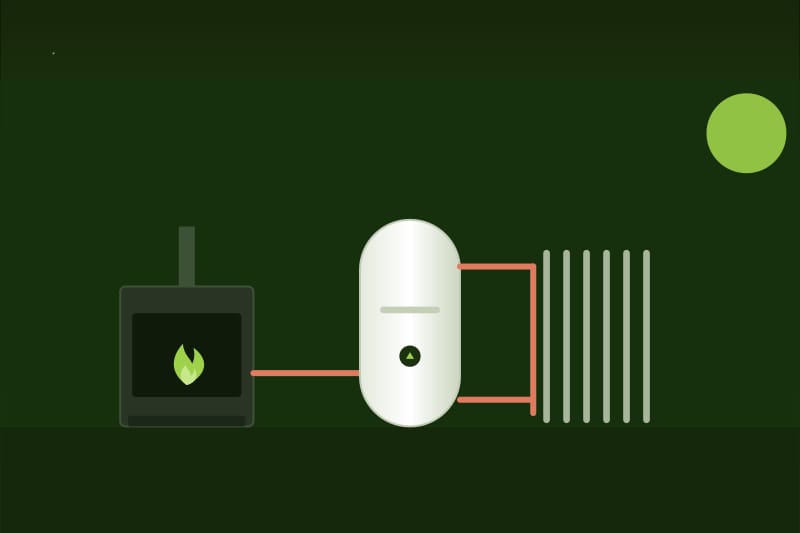
How it works
The firebox has a jacket or a coil through which water circulates. Part of the heat goes into the room as radiant heat, and part goes into the heating system. The heated water flows to the radiators, to a buffer tank or to a hot water cylinder, and a circulation pump moves it around the system. The split between heat to the room and heat to the water differs from product to product, so we check the technical data of the chosen model.
Radiators, underfloor heating and hot water
Radiators run at higher water temperatures than underfloor heating, which works at lower temperatures and needs suitable controls. For domestic hot water, a cylinder with a coil or a combined buffer tank is used. All of this is settled in the design, according to the house.
The buffer tank
A buffer tank (a heat storage tank) takes in the heat produced while the fire burns and releases it gradually. It helps the firebox run steadily and helps limit overheating, because a fireplace cannot be switched off instantly the way a gas boiler can.
Working with your existing heating
The system can work alongside a gas, pellet or electric boiler, as an additional heat source. The hydraulic connections, the valves and the controls are essential so that the two sources do not work against each other. The same logic can apply when combining it with solar hot water systems.
Safety and installation requirements
Solid-fuel installations carry risks: overheating, pressure build-up, carbon monoxide and fire. That is why the following matter:
- the hydraulic installation designed by a qualified person;
- the safety equipment specified for the type of installation (expansion vessel, valves, thermal protection);
- a correctly sized chimney and a fresh-air supply;
- return temperature protection, which helps avoid condensation in the firebox;
- carbon monoxide detectors in occupied rooms;
- compliance with the regulations and approvals in force, including those for pressurised installations.
We make no general claims about efficiency: it depends on the model, the fuel and the way the appliance is used, and the correct figures are those in the product documentation.
How we approach this kind of solution
We look at the type of house, the existing heating system, where the fireplace would stand and how much hot water you need. If a fireplace with a heat exchanger is a suitable choice, we design it together with a qualified installer. If not, we recommend alternatives.
See also
Frequently asked questions
Can I heat the radiators with a fireplace?
Yes, if the fireplace has a heat exchanger and the system is properly designed, with a circulation pump, an expansion vessel and safety devices.
Do I need a buffer tank?
In most configurations it is recommended, for stability and safety. The decision is made at the design stage.
Can it be combined with my existing boiler?
Usually yes, with hydraulic connections and controls that stop the sources interfering with each other.
What is the efficiency?
It depends on the model and on how it is used. We use the figures from the product’s data sheet, not general estimates.
Shall we talk about your project?
Tell us your town and roughly how much you use. We will suggest the next steps.